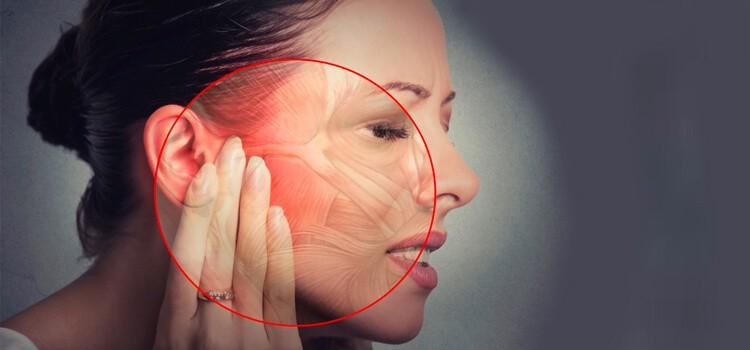
Muscle contracture: what it is, symptoms, causes and treatment

Muscle contractures are one of the most frequent complaints we see at our physiotherapy clinics. Nearly everyone has experienced one at some point: that feeling of stiffness and pain in your back after a long workday, that knot in your trapezius that won't go away, or that neck tension that limits your movement. The truth is that although they're very common, most people don't really understand what's happening in their muscles or how to address it properly.
In this guide, I'm going to explain to you, drawing on my experience as a licensed physiotherapist, everything you need to know about muscle contractures: exactly what they are, how to identify them, why they develop, and most importantly, what you can do to treat and prevent them.
What is a muscle contracture?
A muscle contracture is an involuntary and sustained contraction of a muscle or a group of muscle fibres. Unlike a cramp, which is intense but brief, a contracture persists over time: it can last days or even weeks if not treated properly.
When a muscle becomes contractured, its fibres remain in a constant state of tension without being able to relax. This causes an increase in local stiffness, reduces blood flow to the area and causes an accumulation of metabolic waste products that irritate nerve endings, producing pain.
It's important to distinguish a contracture from other muscle injuries. It's not the same as a muscle tear, where there is actual damage to muscle tissue, nor is it a strain, where the fibres are stretched beyond their capacity. In a contracture, there is no tissue rupture, but rather a state of sustained activation that prevents the muscle from returning to its resting length.
The mechanism is relatively straightforward: the muscle receives a continuous contraction signal, either from mechanical overload, from sustained poor posture or from a protective response of the body to a joint dysfunction. The result is a tense muscle, painful to touch and with reduced mobility.
In clinical practice, we identify contractures by the presence of palpable tense bands within the muscle, which in many cases coincide with what we call trigger points: small nodules that are especially sensitive and can refer pain to distant areas.
Symptoms of a muscle contracture
Recognising a muscle contracture is usually relatively straightforward once you know its characteristic symptoms. These are the most common signs that patients describe to us in clinic:
Localised and constant pain. The main symptom is a dull and continuous pain in the affected area. It's usually not a sharp or stabbing pain, but rather a sensation of heaviness and discomfort that intensifies when you move the area or press on it.
Muscle stiffness. You'll notice that the muscle feels tense and hard to touch. This stiffness limits your ability to move and can make you feel like the area is "seized up".
Palpable knot. In many cases you can feel a hardened or swollen area within the muscle. This knot is the contracted band of fibres itself and is usually especially sensitive to pressure.
Limited movement. The contracture reduces the range of motion of the nearest joint. For example, a contracture in your neck will make it difficult to turn your head, while a lumbar contracture can limit your ability to bend forwards.
Referred pain. Some contractures, especially those containing active trigger points, can send pain to seemingly unrelated areas. A contracture in the upper trapezius can cause headaches, and a contracture in the glute can mimic sciatica.
Feeling of heaviness or fatigue. The affected area feels tired and heavy, as if your muscles can't support your body weight normally.
It's important to know that symptoms can vary depending on where the contracture is located. A back muscle contracture produces different symptoms from a cervical contracture, both in intensity and in the functions it limits.
Why do contractures happen?
Understanding the causes of muscle contractures is fundamental to being able to prevent them. In my clinical experience, these are the most common causes:
Poor sustained posture. This is probably the number one cause nowadays. Spending hours sitting in front of a computer with your back hunched, your head forward and your shoulders elevated creates constant overload in your cervical, thoracic and trapezius muscles.
Stress and emotional tension. Chronic stress has a direct impact on your muscles. When we're stressed, we tend to elevate our shoulders, clench our jaw and tense our back unconsciously. Over time, this sustained tension becomes an established contracture.
Muscle overexertion. Performing intense physical exercise without adequate preparation, lifting weights incorrectly or performing repetitive movements for long periods can overload muscles beyond their capacity to recover.
Lack of warm-up. Starting intense physical activity without warming up first is a frequent cause of contractures, since cold muscles don't have the elasticity or blood flow needed to respond to demands.
Sedentary lifestyle. Prolonged inactivity weakens your muscles and reduces their ability to tolerate efforts.
Dehydration and nutritional deficits. Your muscles need adequate hydration and sufficient supply of minerals such as magnesium, potassium and calcium to function correctly.
Inadequate rest. Sleeping in a bad position, using an unsuitable pillow or not getting enough sleep impairs muscle recovery.
Compensations from other injuries. Sometimes a contracture is not the primary problem but a consequence. Your body may contracture a muscle as a protective mechanism in response to a joint injury, a disc herniation or nearby inflammation.
Back muscle contracture
Back muscle contracture is by far the most common reason for physiotherapy consultation. The back supports a large portion of the body's mechanical loads and is especially vulnerable to poor posture and sedentary behaviour.
The back muscles work constantly to maintain an upright position and stabilise the spine. When these muscles are subjected to excessive load, the muscle fibres shorten and harden, giving rise to contracture.
Contractures in the back usually particularly affect the paraspinal muscles, quadratus lumborum, latissimus dorsi and rhomboids.
To manage back contracture it's essential to combine active treatment with postural modifications. Some exercises we commonly recommend include: gentle spinal rotations in a lying position, the cat-cow exercise, quadratus lumborum stretches and core strengthening exercises.
Lumbar contracture
The lumbar area is one of the regions where contractures generate the most functional limitation. The muscles in the lower back are directly involved in virtually every movement.
A lumbar contracture can make basic tasks difficult, such as tying your shoes or getting out of a chair.
Among the specific exercises we recommend for the lumbar area are: the child's pose in yoga, knee-to-chest stretches, gentle pelvic tilts and glute bridges.
Dorsal contracture
The dorsal area is also a frequent location for contractures. This area is especially susceptible to postural alterations.
People who work for many hours in front of a computer often develop dorsal contractures because of the rounded shoulders posture. The rhomboids and middle trapezius are the most commonly affected muscles.
For this area, pectoral opening stretches, scapular retractions and resistance band rowing exercises are especially useful.
Trapezius contracture
Trapezius contracture is probably the most recognisable of all contractures. The trapezius is that large diamond-shaped muscle that extends from the base of your skull to the middle of your back and towards your shoulders.
Trapezius contractures are extremely common in people who work in front of a computer, since the typical office posture puts the upper trapezius under constant tension.
The symptoms include pain and stiffness in the upper shoulders, difficulty turning your head, tension headaches and, in more intense cases, referred pain towards your arm.
Treating trapezius contracture requires a comprehensive approach. First, modify the conditions that cause it: adjust your screen and chair height, use ergonomic peripherals and take active breaks every 45-60 minutes.
The most effective stretches for the trapezius are: lateral neck flexion held for 30 seconds, chin retraction, slow shoulder shrugs and self-massage with a tennis ball against the wall.
Neck and cervical contracture
Cervical contractures are another frequent complaint at our clinics. The neck area is especially vulnerable because it must support the weight of your head (approximately 5 kg) and allow a wide range of movement.
Currently, the incidence of cervical contractures has increased notably due to prolonged use of mobile devices. What we call "text neck" or "tech neck" is a sustained cervical flexion posture that can multiply by four or five the load that your neck muscles support.
The symptoms include pain and stiffness in the neck, difficulty turning your head, headaches that usually start at the back of your neck, and in some cases dizziness or instability.
The muscles most frequently affected are the sternocleidomastoid, scalenes, splenius and suboccipitals.
To treat and prevent cervical contractures, we recommend: cervical retraction exercises, gentle neck rotations, sustained lateral stretches and deep neck muscle strengthening exercises.
It's also fundamental to pay attention to the pillow you use for sleeping. A pillow that keeps your cervical spine in a neutral position can prevent many contractures.
Muscle contracture treatment
Treatment of a muscle contracture depends on its severity, location and how long it has been present. In most cases, a combination of professional manual treatment and self-care measures is the most effective strategy.
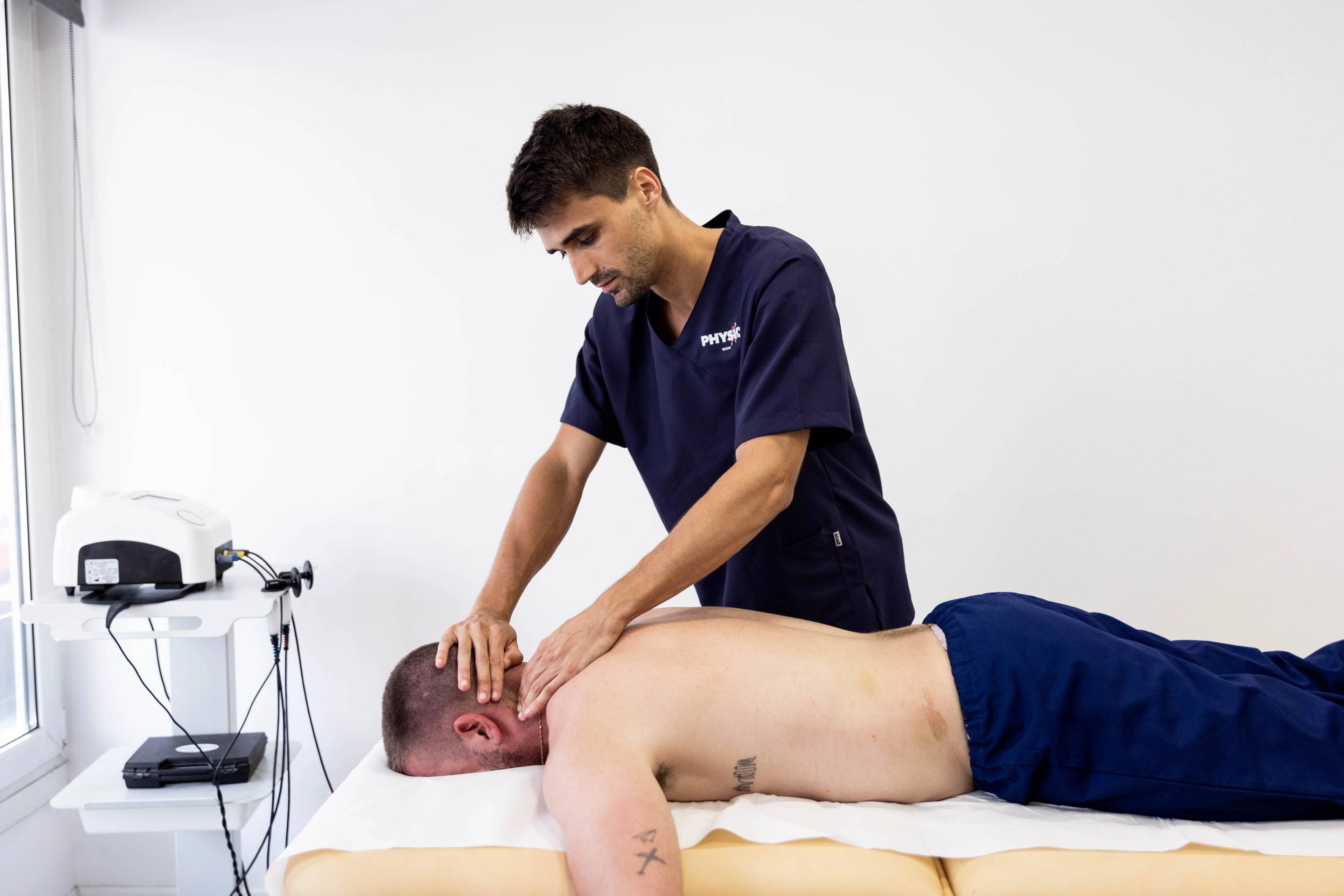
From a professional perspective, in physiotherapy sessions we use various techniques to resolve contractures. Manual therapy includes deep tissue massage, joint mobilisations and muscle energy techniques that combine gentle contractions with stretching.
Dry needling is another technique we use with excellent results to treat trigger points. It consists of inserting a fine needle into the trigger point to generate a local spasm response that helps the muscle relax.
Additionally, diathermy or tecar therapy allows us to heat tissues deeply, increasing blood flow and promoting muscle relaxation.
Therapeutic exercise is a fundamental pillar of treatment. A personalised exercise programme that combines mobility, stretching and progressive strengthening is what truly ensures that the contracture doesn't return.
What to do at home
Beyond clinic treatment, there are several things you can do at home to relieve a contracture:
Apply local heat. Heat promotes muscle relaxation and increases blood flow. You can use a seed heating pad or electric blanket for 15-20 minutes over the affected area.
Self-massage with a foam roller. The foam roller is an excellent tool for releasing muscle tension in large areas such as the back and legs.
Massage ball for trigger points. For more specific areas, a massage ball allows you to apply localised pressure. Place it between your body and the wall and apply pressure for 30-60 seconds.
Gentle stretching. Perform gentle stretches of the affected area, holding each position for 20 to 30 seconds.
Proper cervical pillow. If you suffer from frequent contractures in your neck, investing in a quality cervical pillow can make a big difference.
Products recommended by our physiotherapy team: medium-density foam roller for back self-massage, seed heating pad for dry heat, textured massage ball for trigger points and viscoelastic cervical pillow for prevention.
When to see a physiotherapist
Although many contractures can improve with self-care, there are situations where it's important to seek professional help:
- When pain persists more than a week despite applying heat and performing stretches.
- If the contracture prevents you from carrying out everyday activities.
- If you notice tingling, numbness or loss of strength in your arms or legs.
- If contractures repeat frequently.
- If the pain appeared following a trauma or accident.
A physiotherapist can identify the real cause of your contracture, apply manual techniques that speed up recovery and design a personalised exercise programme.
How to prevent contractures
Prevention is always the best treatment. These are the measures we most recommend:
Look after your work posture. Make sure your screen is at eye level, feet on the floor, back straight and shoulders relaxed. Get up every 45 minutes.
Stay active. Regular exercise is the best prevention. Walking, swimming or yoga strengthens muscles and improves flexibility.
Stretch daily. Dedicate 5-10 minutes each day to stretching neck, shoulders, back and hips.
Manage stress. Techniques such as diaphragmatic breathing, meditation or walking outdoors can significantly reduce muscle tension.
Hydrate properly. Drink at least 1.5-2 litres of water a day.
Look after your rest. Invest in a good mattress and pillow suited to your sleeping posture.
Warm up before exercise. Never start intense physical activity cold.
Muscle contractures are a very common problem, but one that can be treated effectively and, most importantly, prevented. Understanding what causes them gives you the tools to manage pain and prevent it from becoming recurring.
Remember that if contractures are frequent or don't improve with self-care, an assessment by a licensed physiotherapist is essential.
Do you suffer from frequent muscle contractures? Our team of qualified physiotherapists can help you with a personalised treatment plan. Book your appointment at the nearest clinic.