Musculoskeletal Ultrasound
What is musculoskeletal ultrasound?
Musculoskeletal ultrasound is a diagnostic imaging technique that uses ultrasound waves to visualize soft tissues of the musculoskeletal system in real time: muscles, tendons, ligaments, bursae, nerves, and joints.
Unlike other imaging tests, ultrasound allows for dynamic assessment, observing structures while the patient performs movements or muscle contractions. This makes it a fundamental tool for accurate diagnosis and injury monitoring.
Advantages of ultrasound in physiotherapy
Musculoskeletal ultrasound offers multiple advantages that make it a differentiating resource in clinical practice:
Complete safety: It is a completely harmless test, without radiation or side effects. It can be performed as many times as necessary.
Real-time assessment: It allows observation of tissues while the patient moves, identifying problems not detected at rest.
Objective diagnosis: It provides images that complement clinical examination, reducing the margin of error in diagnosis.
Evolution monitoring: It allows comparing images between sessions to objectively evaluate patient recovery.
Guide for invasive treatments: It facilitates precise application of techniques such as dry needling or percutaneous electrolysis.
What conditions can we assess?
Ultrasound is especially useful for diagnosing and monitoring:
• Muscle and fiber tears of any grade
• Tendinopathies and tendinitis (shoulder, elbow, knee, Achilles...)
• Bursitis and joint effusions
• Ligament injuries and sprains
• Nerve entrapment syndromes (carpal tunnel, etc.)
• Cysts and calcifications
• Hematomas and bruises
What is an ultrasound session like?
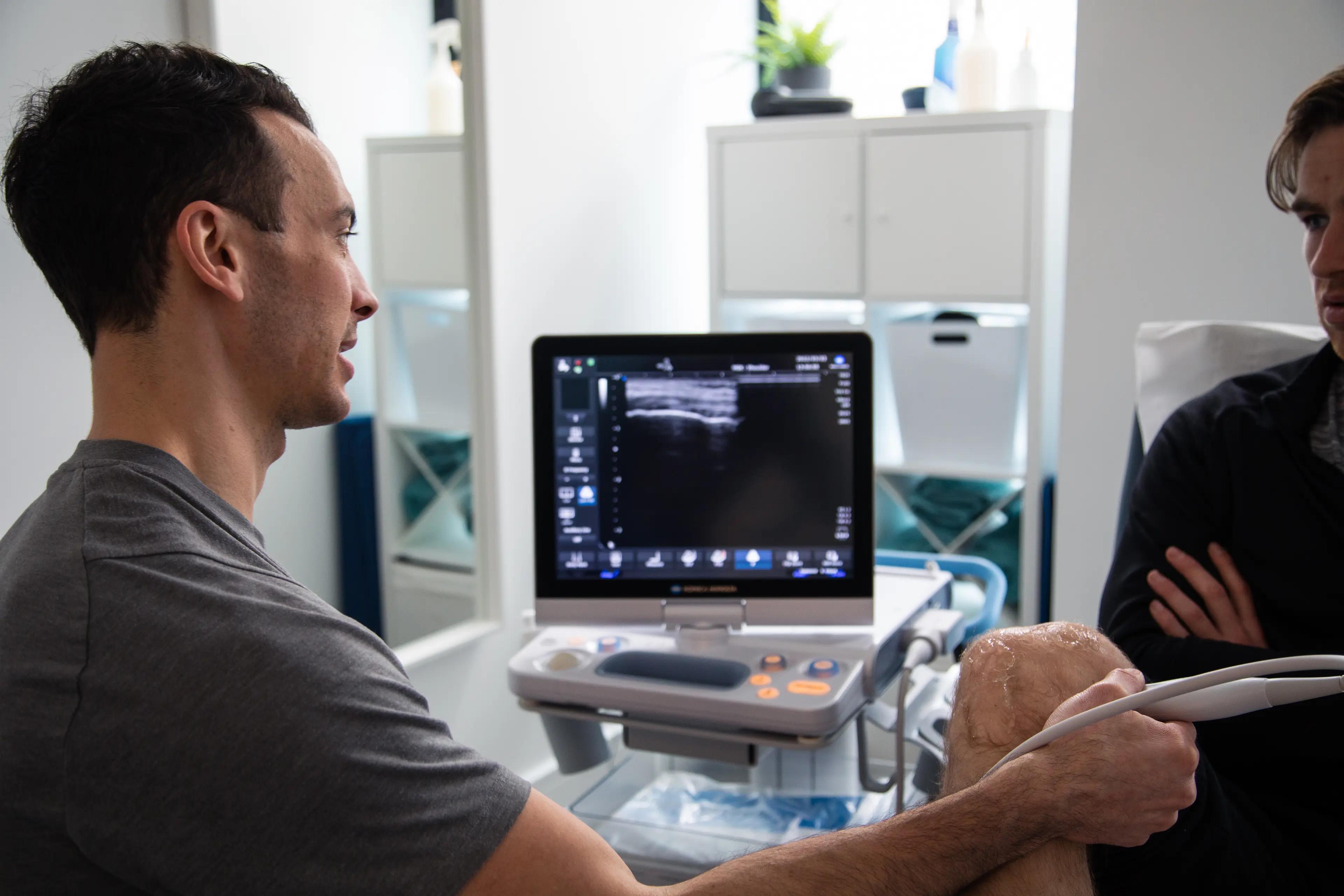
The ultrasound session is quick, comfortable, and painless. The physiotherapist applies a conductive gel to the area to be explored and slides the transducer to obtain the images. During the examination, you may be asked to perform certain movements for a complete dynamic assessment.
Results are immediate: you will be able to see the images on screen and receive a detailed explanation of the findings. This information allows us to design a fully personalized treatment plan adjusted to your specific injury.
Benefits
- Objective and real-time assessment of soft tissues
- Accurate diagnosis without radiation or side effects
- Dynamic evaluation during movement
- Objective monitoring of injury progression
- Guide for invasive techniques like dry needling
Indications
- Muscle and fiber tears
- Tendinopathies and tendinitis
- Bursitis and joint effusions
- Ligament injuries
- Nerve entrapment syndromes
- Pre and post treatment assessment
Ready to get started?
Book your appointment with our expert physiotherapists.